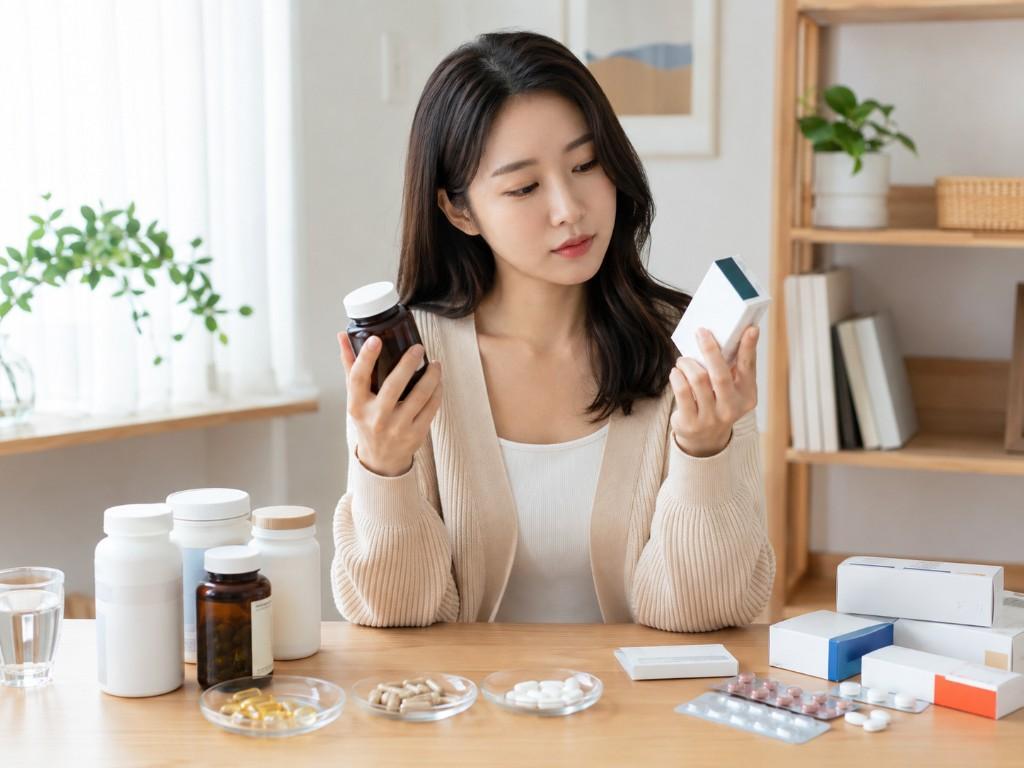
Supplements vs Medicine: A Common Confusion in Korea
Health functional foods, OTC products, and prescription drugs often sit on the same shelf in our minds. After working in health products, here's how I tell them apart.
The same counter, different rules
Walk through a Korean pharmacy, convenience store, or online mall and you'll see prescription drugs, over-the-counter medicines, health functional foods (건강기능식품), and general supplements marketed side by side.
Consumers — including past me — often treat them as variations of the same idea: "something I take to get healthier."
They are not interchangeable.
How I define each category in plain language
Prescription medicine
- Requires a clinician's prescription
- Evaluated for specific therapeutic use, dosing, and safety monitoring
- Intended to treat, manage, or prevent disease under medical supervision
Over-the-counter (OTC) medicine
- Sold without prescription within regulated categories
- Still medicine — with approved indications, dosing limits, and warnings
- Can interact with other drugs; "OTC" does not mean "harmless"
Health functional foods (Korea)
- Regulated category with approved functional claims on specific ingredients
- Not the same as general vitamins on a foreign e-commerce site
- Claims are limited to what registration allows — marketing sometimes stretches farther than the label legally should
General dietary supplements
- Products intended to supplement the diet
- Cannot legally claim to diagnose, treat, cure, or prevent disease in most jurisdictions
- Quality, dose, and evidence vary widely by brand and ingredient
Why confusion matters
When supplements are mentally filed under "gentle medicine," people:
- Combine them with prescriptions without telling their doctor
- Stop prescribed treatment because an influencer promised you can go natural"
- Choose products based on packaging, not dose or evidence
- Delay medical care for conditions that need diagnosis — shingles taught me this painfully
Side-by-side comparison I use
| Question | Medicine | Supplement / functional food |
|---|---|---|
| Who prescribed it? | Clinician (Rx) or regulated OTC label | Usually self-selected |
| Purpose | Treat/manage specific condition | Fill dietary gap or general wellness |
| Evidence standard | Regulatory review for approved claims | Varies; often limited |
| Risk profile | Known interactions; monitoring may be needed | "Natural" ≠ safe with all meds |
| If symptoms persist | Follow up medically | Not a substitute for diagnosis |
Red flags in marketing (Korea and elsewhere)
- "Replaces your medication"
- Before/after disease recovery imagery
- Testimonials treating serious illness
- "Doctors hate this" style copy
- No clear ingredient amount per serving
Questions to ask before buying
- What problem am I trying to solve — nutrient gap or medical symptom?
- Am I already on prescription or OTC drugs?
- Does the label state amount per serving, not just "contains"?
- Is there a registered functional claim — and do I understand its limits?
- Would a blood test or clinician visit answer this better?
When to choose medicine over supplements
Seek medical care — not a new powder — when you have:
- Persistent or worsening pain (especially one-sided nerve pain)
- Fever, rash with systemic symptoms, or vision changes
- Abnormal screening results
- Chronic conditions managed with existing prescriptions
What I learned
Supplements have a place in my life — vitamin D, occasional minerals, thoughtful choices after reading labels. They do not belong in the slot where diagnosis and treatment live.
Separating the categories on my shelf helped me separate them in my decisions.
Industry-informed personal perspective. Not medical advice. Discuss all products with your healthcare provider.
Stay in touch
Wellness articles in your inbox
New health and nutrition notes from Korea — thoughtful, not salesy. Free, unsubscribe anytime.