Why Everyone Ends Up at Yangjaecheon After Work
A first-person guide to Yangjaecheon, the Gangnam-Seocho stream locals actually walk — quieter than the Han River, and where ordinary Seoul life happens.
2026-07-17 · 7 min read
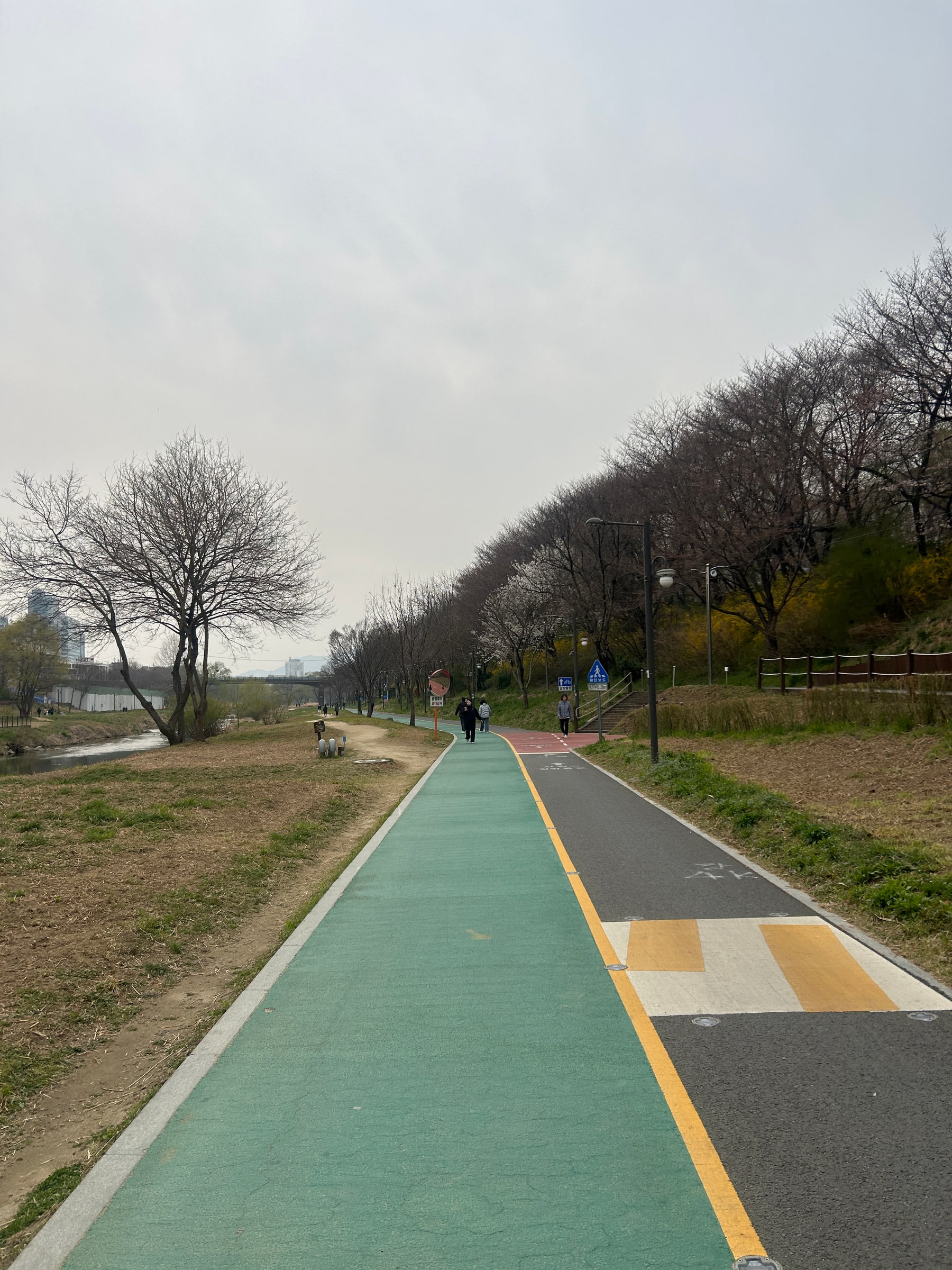
Green for walking, asphalt for bikes — the stream asks you to pick a lane.
My office happens to sit near Yangjaecheon, so I walk it most lunch breaks — it's genuinely one of the reasons I like coming into work. On a clear day, I find myself looking forward to that walk before I've even left for the office. I used to live near the stream too, and back then, on any day off with nothing planned, Yangjaecheon was where I'd end up anyway. Looking back, I think so much of the ease I've had across a lot of ordinary days was found right there, on that path. If ease is the rare thing a busy life doesn't hand you on its own, Yangjaecheon is where I go to have it manufactured for me. I don't go because I have an occasion. I go because it's there, and because not going feels like the thing that would need explaining. Among Seoul's third places, this is the one I keep returning to without scheduling it.
What Yangjaecheon Actually Is
Yangjaecheon is a stream, not a river — a modest waterway that runs through Gangnam and Seocho and down into Gwacheon, with paths running alongside almost the entire way. On each bank there are three tiers of path, which means six lines running in parallel across the whole stream. The two lanes closest to the water are each split down the middle — one side for walking, one side for cycling — so even the infrastructure assumes you're either strolling or training, and asks you to pick a lane accordingly.
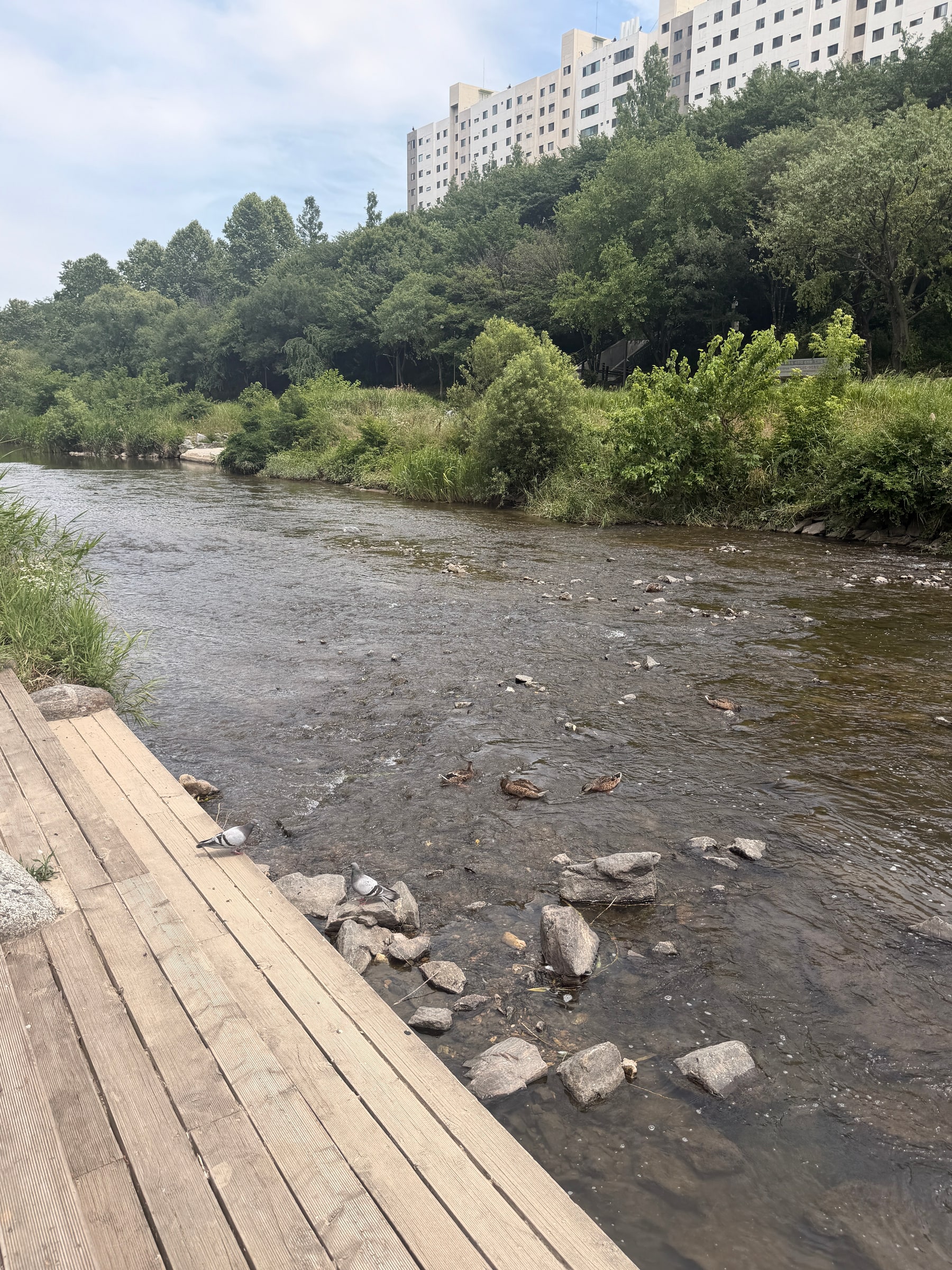
Apartment towers on one bank, ducks on the other — the neighborhood's backyard stream.
There are clean public restrooms spaced along the route, which matters more than it sounds like it should when you're on a 40-minute loop. Climb up off the embankment at almost any point and you land directly among restaurants and cafés — close enough to fold into the walk itself: eat something, get a coffee or a glass of wine, then walk it off along the water. It's become a fairly standard date formula around here for exactly that reason.
What Cherry Blossom Season Reveals
Most of the year, my lunchtime walk is quiet enough to think in. Cherry blossom season changes that completely — a crowd shows up that I don't see the rest of the year, and my usually peaceful lunch break gets genuinely disrupted by foot traffic.
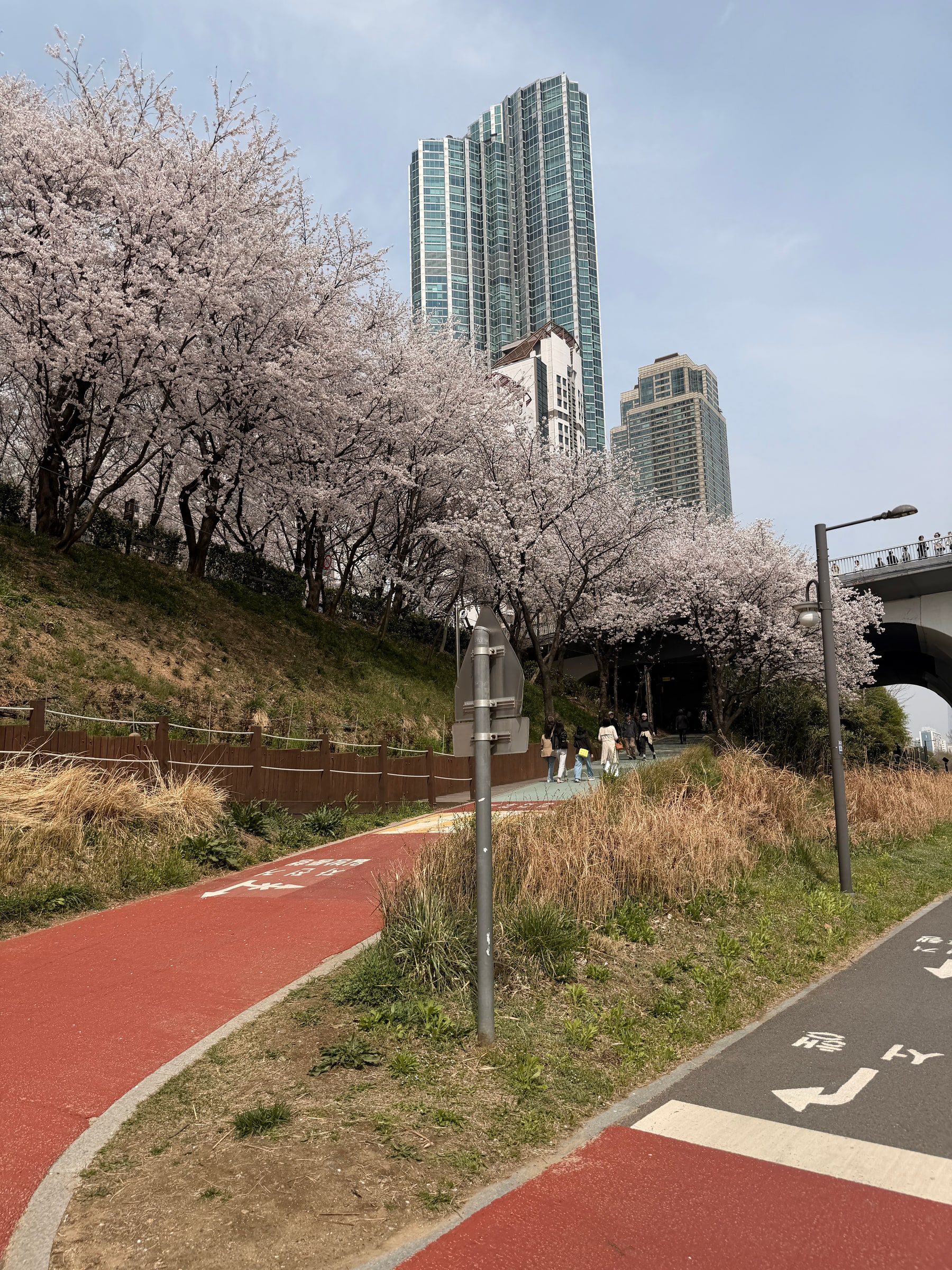
Paths marked 서행 — go slow — under the blossoms and the skyline.
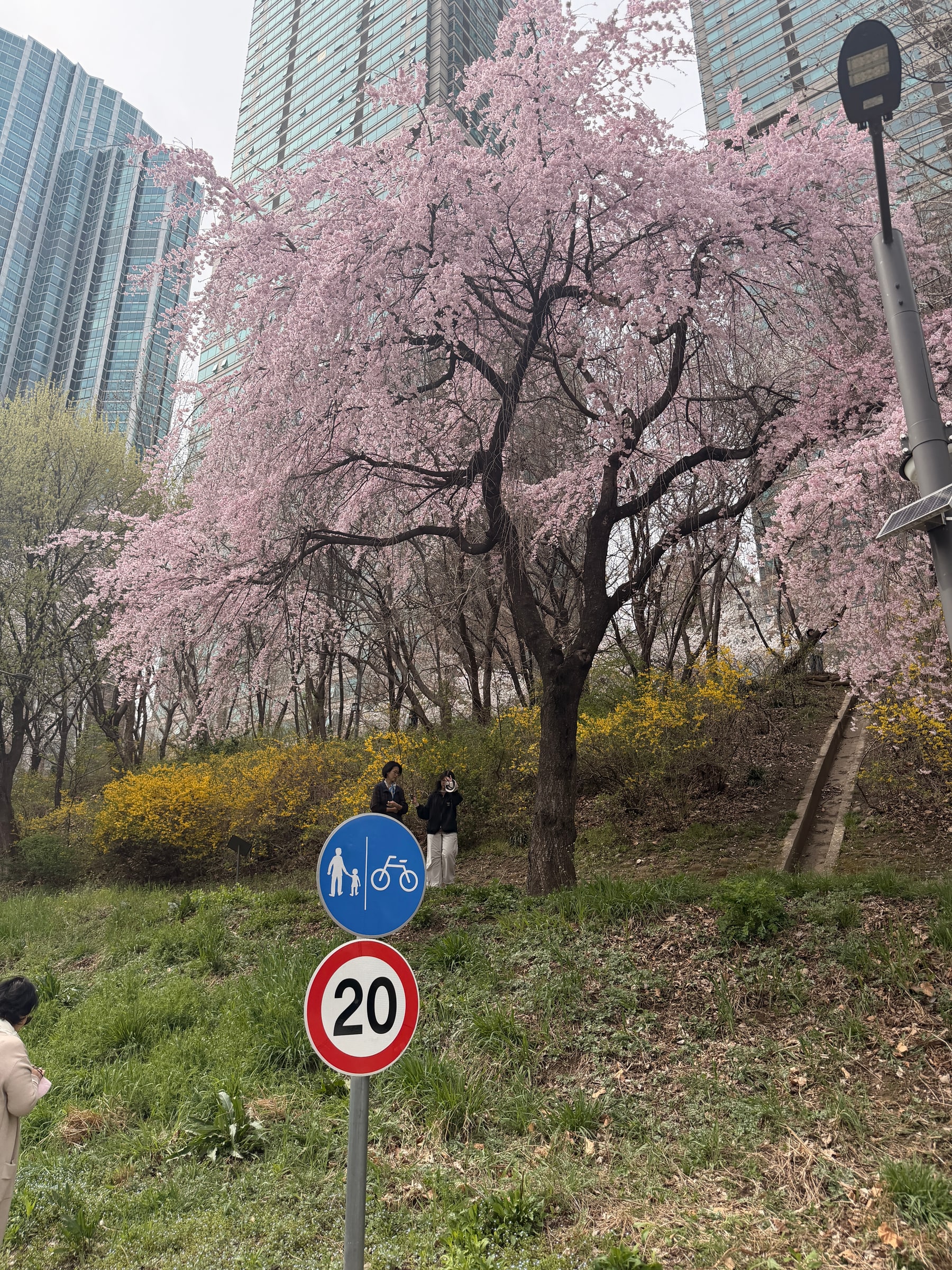
The soft pink and yellow of spring, with Tower Palace–scale towers behind it.
The strangest part is the foreign couples doing wedding photoshoots along the blossoms. I see them often enough that it's clearly not a coincidence — a photographer, an assistant, and a couple who look like they've traveled from Southeast Asia, moving as a coordinated team. Someone, somewhere, built an actual tourism package around this. It's a small, specific reminder that Yangjaecheon isn't just a neighborhood secret; it's already been discovered and packaged by someone with a business plan.
The Running Crews That Disappeared
For a while, when group running was trending, it wasn't unusual to see packs of runners moving down the path together. Then banners went up around Yangjaecheon telling groups of three or more not to run together. It became enough of a talking point that large-group jogging mostly vanished from the stream after that.
I think it says something real about Korea that this became the flashpoint: this is a society that's genuinely uncomfortable with standing out, and a new hobby among young people almost always becomes controversial here before it becomes normal. And yet the cycling clubs still tear past in tight groups, completely unbothered, no banners aimed at them. Whatever the actual reasoning was, it clearly wasn't just about crowding the path. Every so often one lone ajusshi cyclist rolls through blasting trot music loud enough for the whole path to hear, and somehow that draws no complaints either.
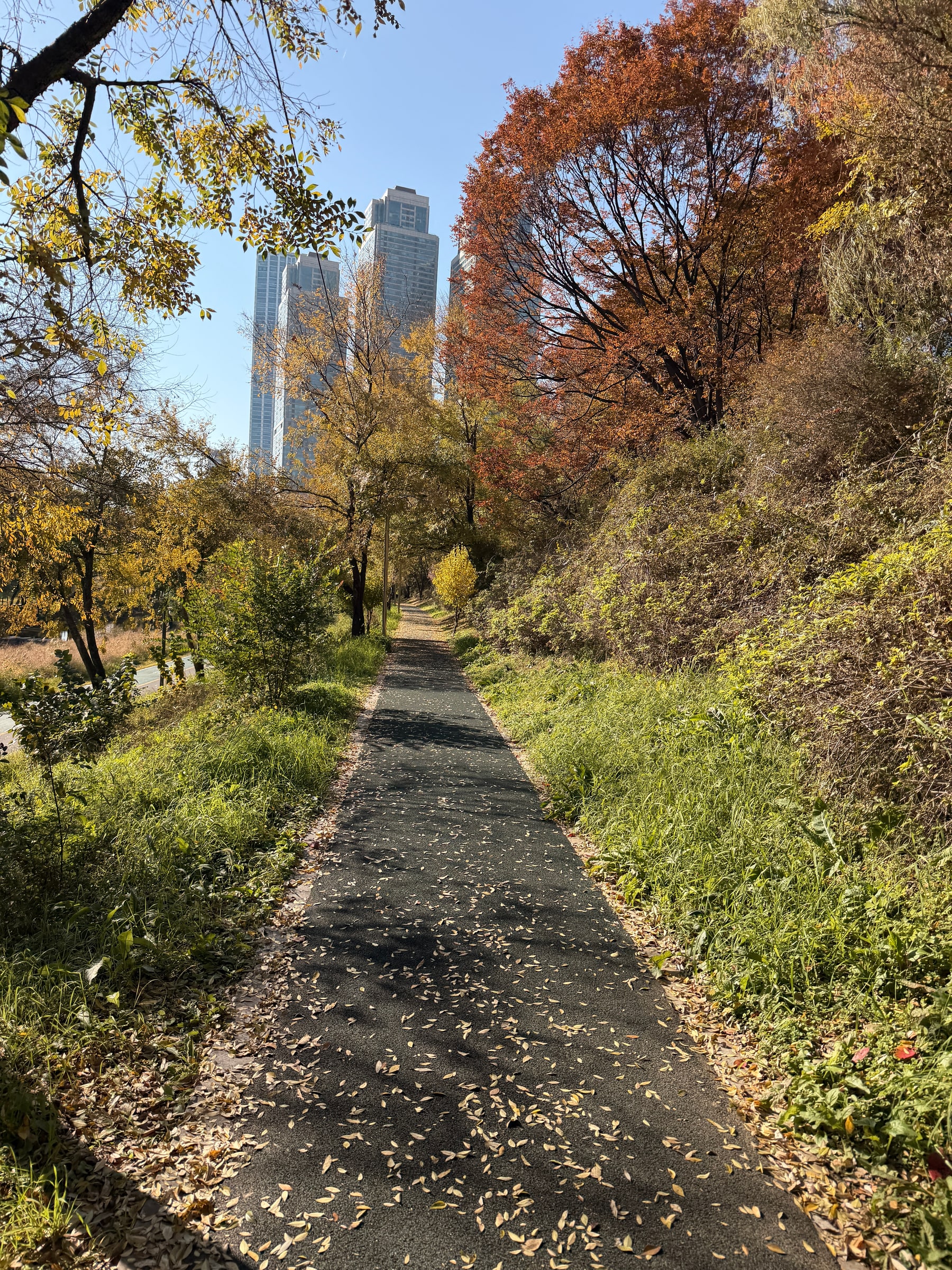
Running crews of three or more, once common here, mostly disappeared after the backlash. The path itself never emptied.
Somebody's Budget Line
Seocho and Gangnam are two of the wealthier districts in Seoul, and Yangjaecheon sometimes feels like where their leftover budget goes to get spent. Every season brings a different flourish: elaborate flower beds, expanded park landscaping stretching across the Yangjae and Dogok stretches, a rice-paddy experience patch complete with scarecrows dressed in actual brand-name clothing, live music on nice weekends, food truck festivals when the weather cooperates, even the occasional casual art exhibition set up along the path.
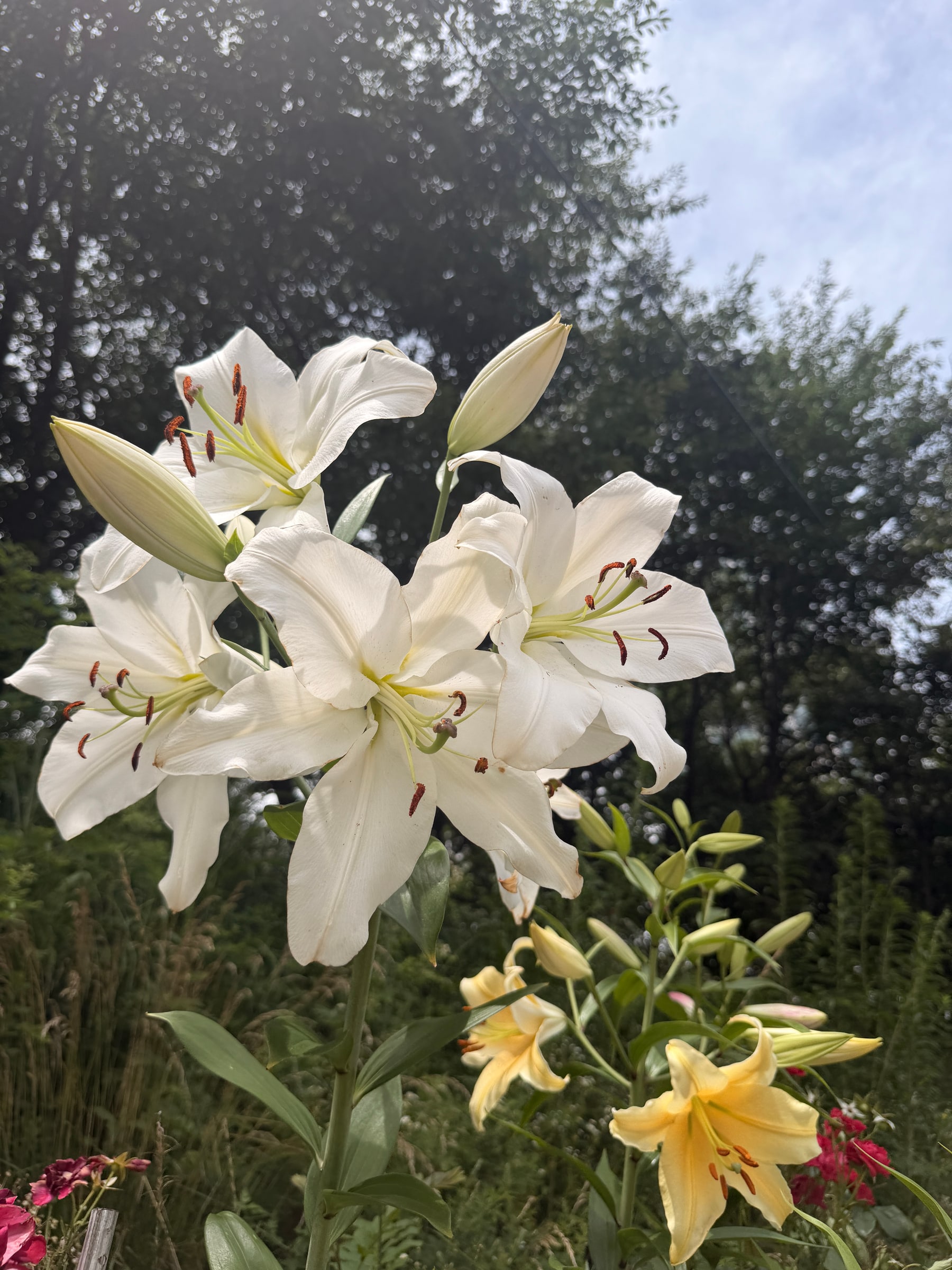
Seasonal planting that actually gets used — not just photographed once and forgotten.
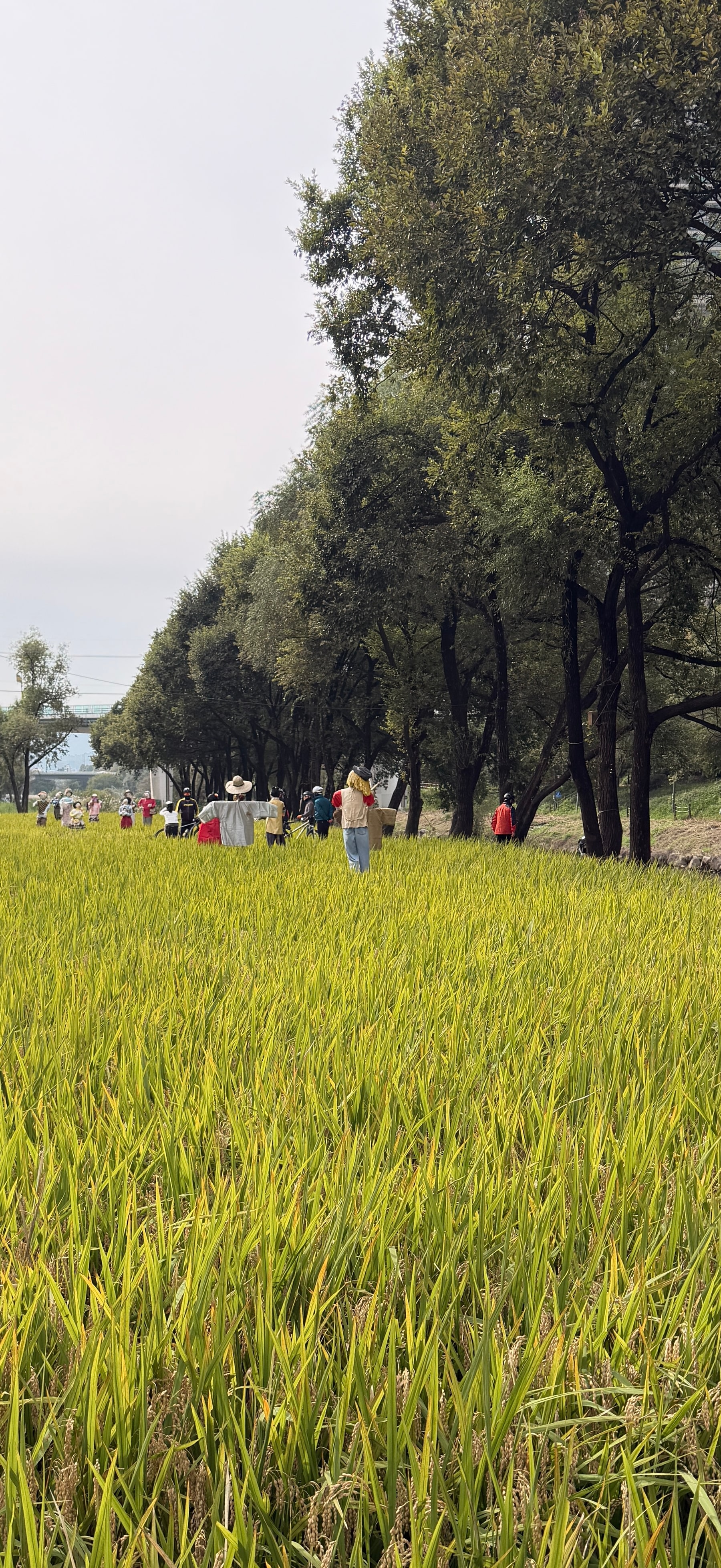
Scarecrows in streetwear in a rice patch between Gangnam and Seocho — leftover budget, spent where people show up.
I don't actually mind the spending. It's obviously not money wasted on something no one uses — residents and office workers are genuinely out here in numbers, every day, in a way that makes the flower beds feel earned rather than decorative.
Evening, When It Actually Fills Up
Once summer evenings cool down, Yangjaecheon turns into the neighborhood's real exercise circuit. Korean ajummas power-walk with their arms bent at a sharp right angle, pumping like they're racing something invisible. Older residents move at a pace that would embarrass people half their age. Runners in full gear do their laps. Couples walk slowly enough that it's clearly not about the exercise. People just sit on the benches and stare at nothing, alone or with someone, for no particular reason at all. Everyone's there for a slightly different version of the same thing.
Small, But Not Small
Yangjaecheon doesn't have anything close to the Han River's scale, and it doesn't try to. What it has instead is a kind of intimacy the Han can't offer — a scale you can actually walk end to end, restaurants close enough to be part of the plan rather than a separate errand, a stream narrow enough that you're never far from the water no matter which of the six lanes you're on.
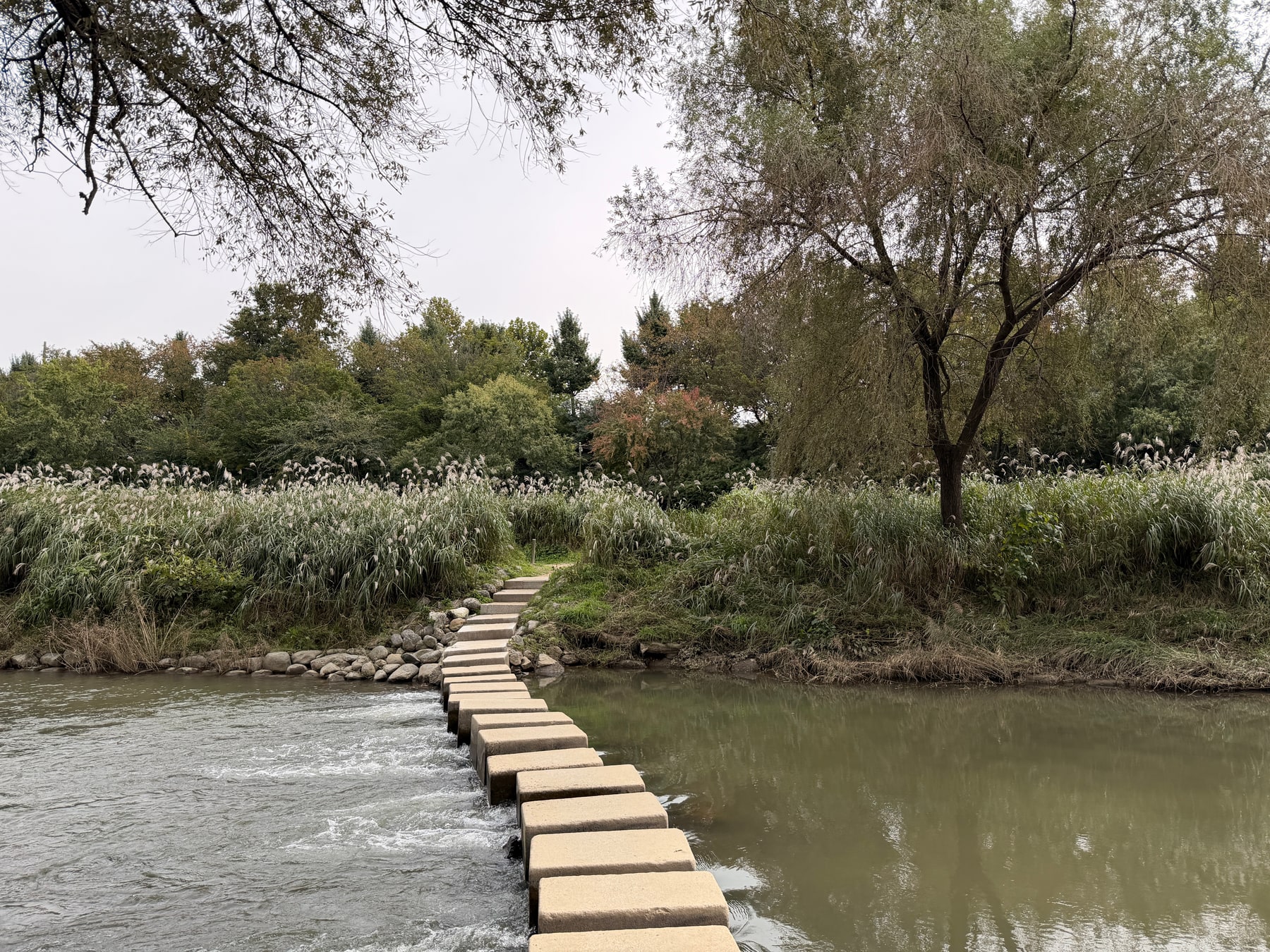
Close enough to the water that you can cross it on stones — something the Han can't offer.
And Still, Yangjaecheon
I don't think I fully understood, until I sat down to write this, how much of my own sense of ease over the years has simply been located here — not in one big memory, but in an accumulation of unremarkable lunch breaks and unplanned free afternoons. Nobody scheduled any of it. I just kept ending up there, the way you end up somewhere that was built, without anyone quite saying so, to be exactly what home and work aren't.
If you're mapping Seoul's third places beyond the famous ones, start here: free, open year-round, and still mostly used by the people who live and work alongside it.
Location note: Yangjaecheon runs through Gangnam-gu, Seocho-gu, and Gwacheon — nearest stations vary by section (Yangjae, Maebong, Dogok among them). Free, open year-round, busiest during cherry blossom season and after 6 p.m. in summer.