Incheon Airport Isn't a Landmark to Me. It's Just Where I Wait.
Not the ice rink or the indoor garden — what Incheon Airport actually looks like from the inside, as told by someone who passes through it too often to be impressed anymore.
2026-07-30 · 7 min read
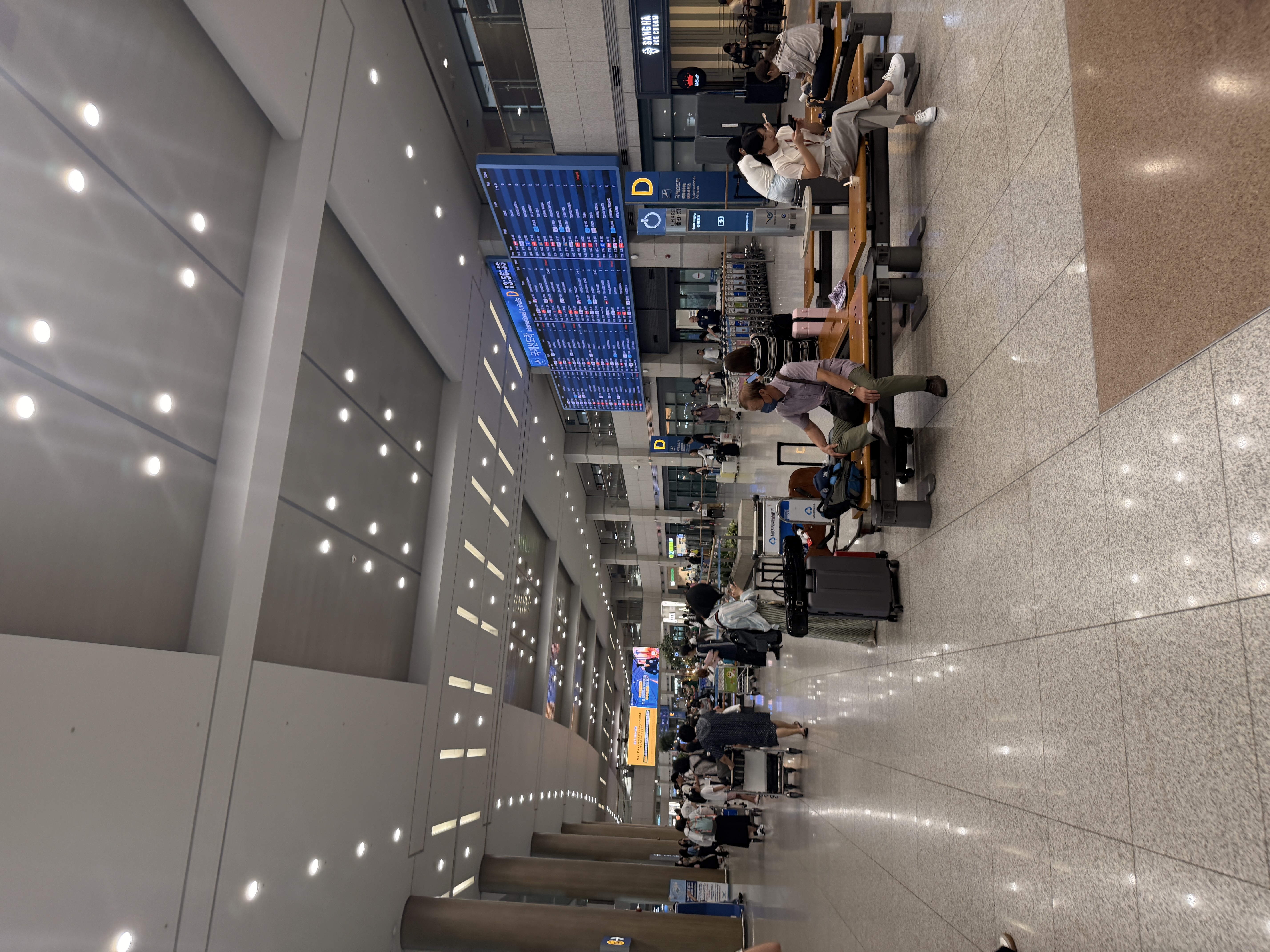
The international arrivals board, Gate D, a little after 1:56pm. Nobody around me is looking at it like it's impressive. They're looking at it like it's Tuesday.
Every few months, some list ranks Incheon among the best airports in the world, and for a few days my feed fills up with drone shots of the indoor gardens and the ice rink nobody's ever actually seen anyone skate on. I've lived here long enough that none of that registers anymore. To me, Incheon isn't a destination or an achievement. It's a waiting room. A big, well-lit, slightly too-air-conditioned waiting room that I pass through the way other people pass through a subway transfer — impatiently, and without looking up.
Most articles about this airport are written for someone landing here for the first time, checking off the famous features one by one. This one isn't that. This is what's actually going on at bench-level, on an ordinary afternoon, for the people who are just trying to get somewhere.
Charging Towers Everywhere — and Nowhere Special
If you want to know what Incheon Airport actually feels like to the people using it, don't look at the ceiling. Look at the benches.
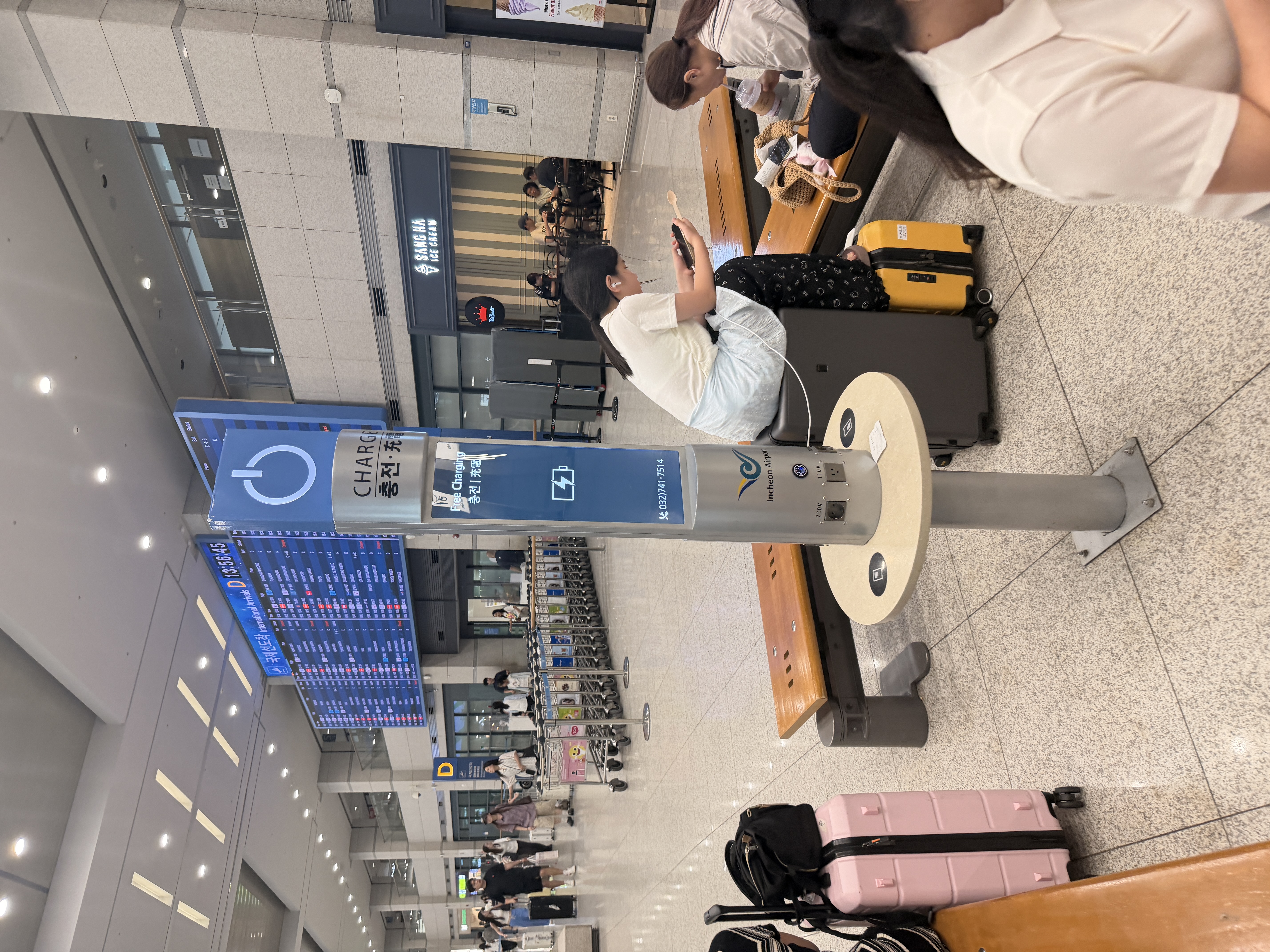
A charging tower near Gate D — someone already camped on their suitcase next to it, phone plugged in, not going anywhere.
There are so many of these that none of them could ever be a landmark. Every other bench cluster seems to have one, and after a while you stop noticing which tower you're at — you just sit near a plug. That density is the point. Korea's standard for this kind of thing still feels almost unfairly convenient to me. Overseas, finding somewhere to charge often meant hunting for a café outlet, buying something you didn't want, or giving up and watching the battery drain. Here, you walk a few meters and there's a tower with 220V, 110V, and USB already waiting.
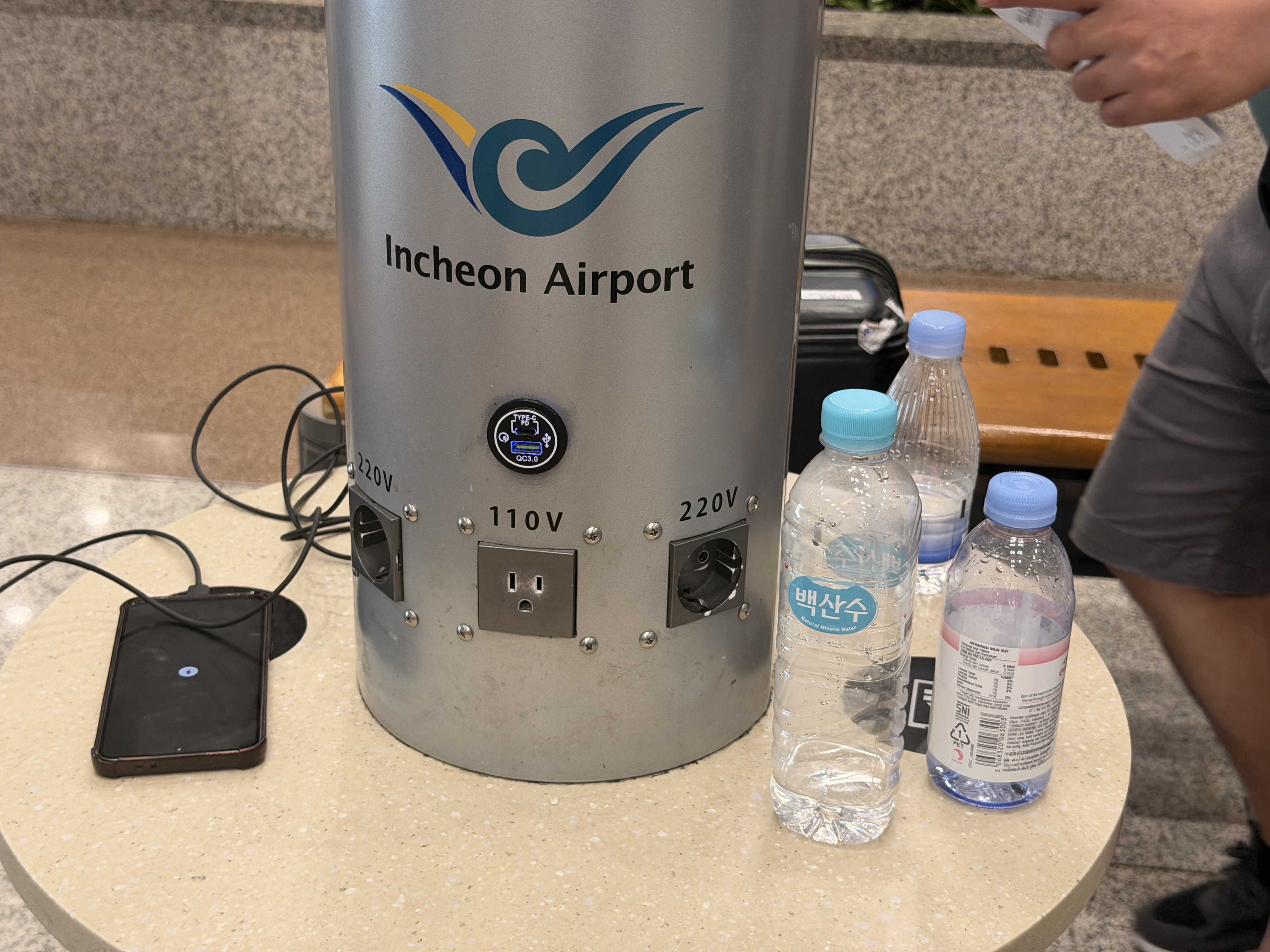
220V, 110V, USB-C, all clearly labeled — someone's phone already charging, unattended, trusted completely.
I've never once seen anyone hover protectively over their phone while it charges here. You just plug it in, sit down, and go do something else — buy a coffee, sit on the next bench over, whatever. Nobody's watching it. That's not really a comment on airport security so much as it's a comment on how safe leaving your stuff unattended still generally feels here, which took me a long time to unlearn my instincts about. The first time I did it, I stood a few feet away pretending to look at my ticket, unable to actually walk off. Now I don't even think about it.
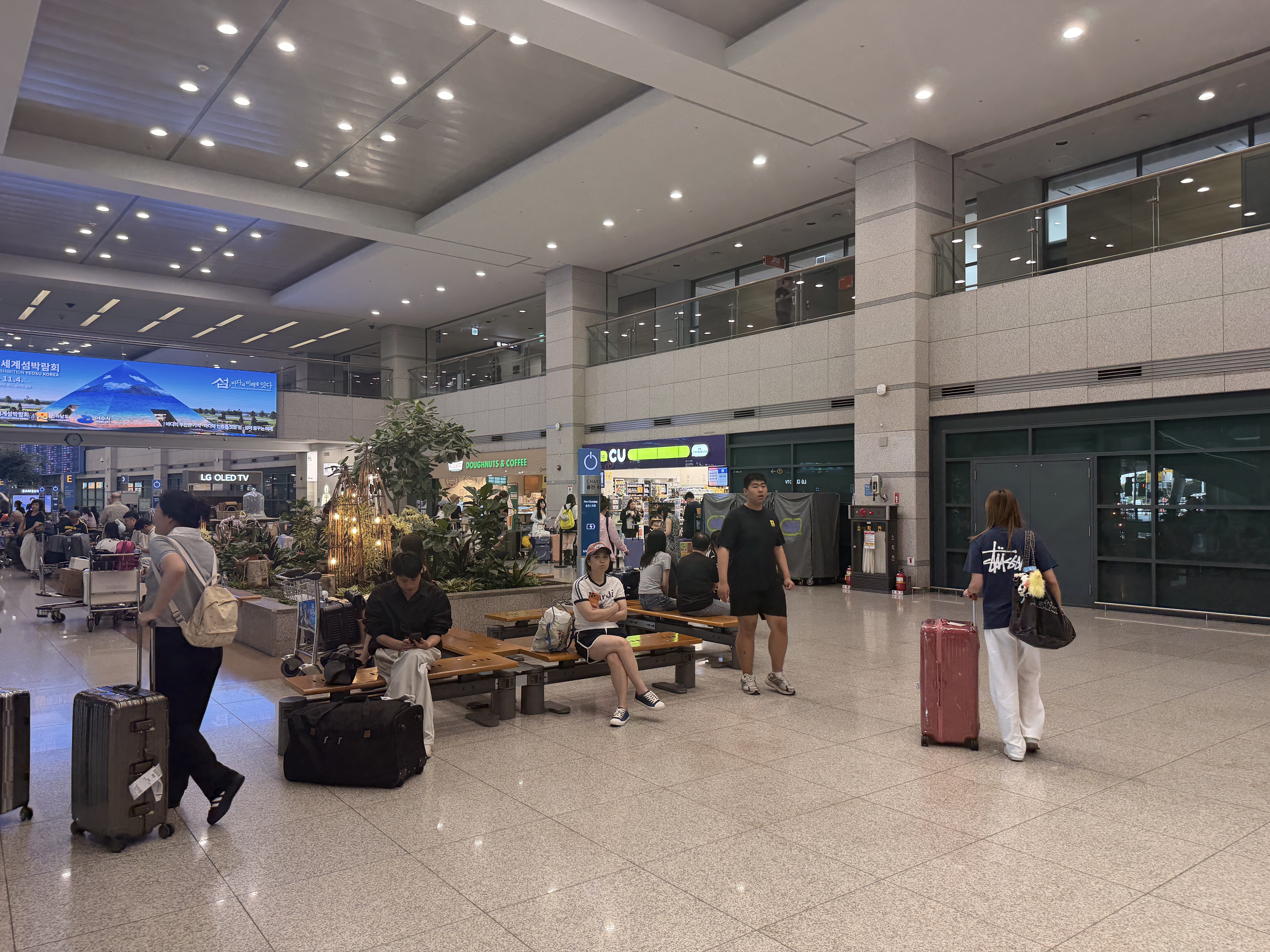
Wooden benches, rolling suitcases, a CU and a Dunkin glowing in the back — the actual geography of an ordinary afternoon here.
Nobody's in a Rush at the Bus Ticket Machines
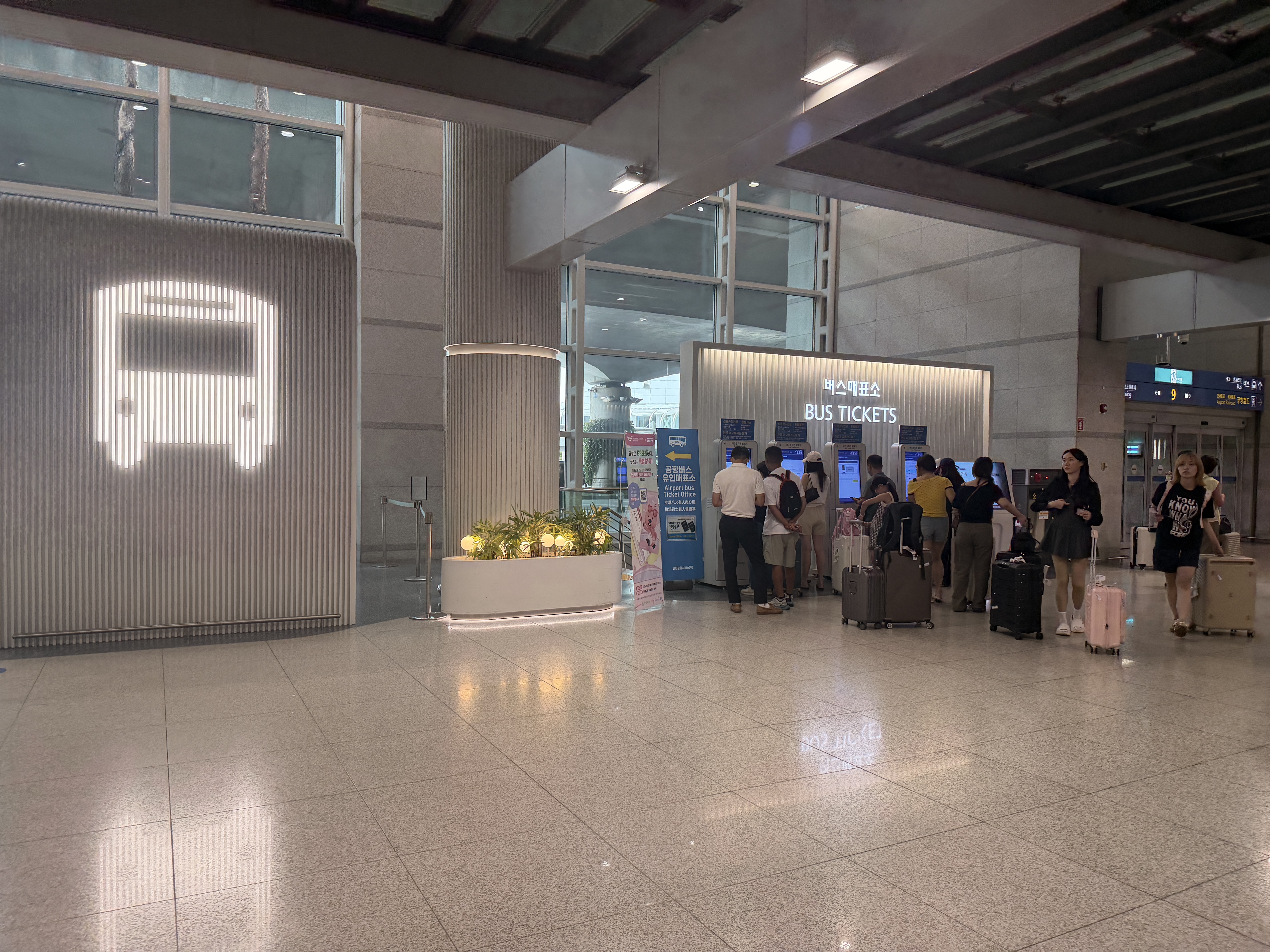
The bus ticket line — mostly foreign travelers reading the screens twice, locals already knowing which machine they need.
The bus ticket counters are where you can tell, instantly, who's a tourist and who isn't. Tourists cluster at the machines, reading every line of the screen twice, comparing the express bus and the limousine bus like the wrong choice might ruin the trip. Locals walk straight past them toward the far end, already knowing the platform number, already holding their T-money card. I used to be in the first group. Now I'm just quietly annoyed when I end up stuck behind it, which is its own small sign of how unremarkable this building has become to me.
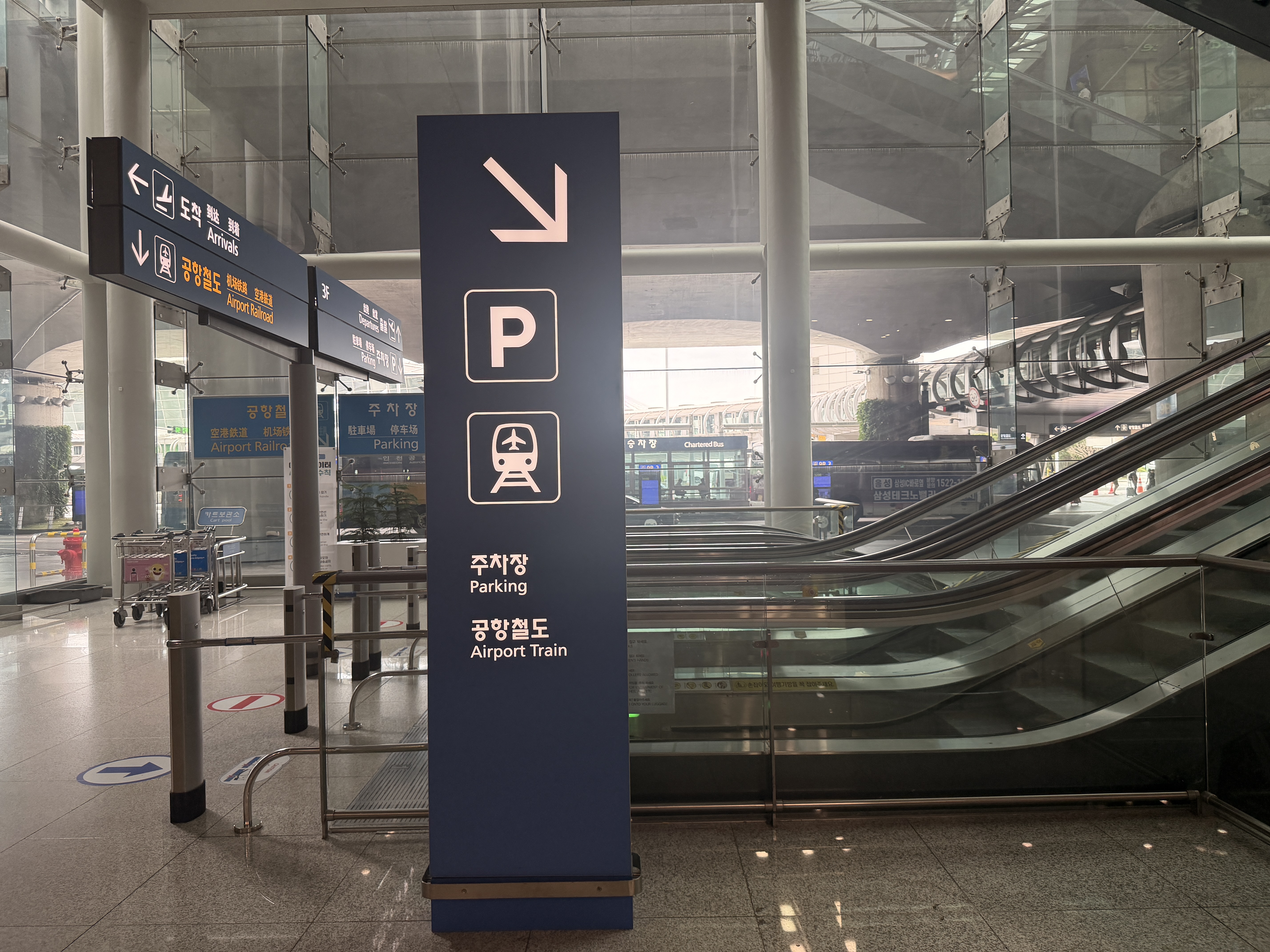
Parking one way, Airport Train the other — the people who live here stop reading these signs after the third trip.
The CU Is Doing More Business Than Any Duty-Free Shop
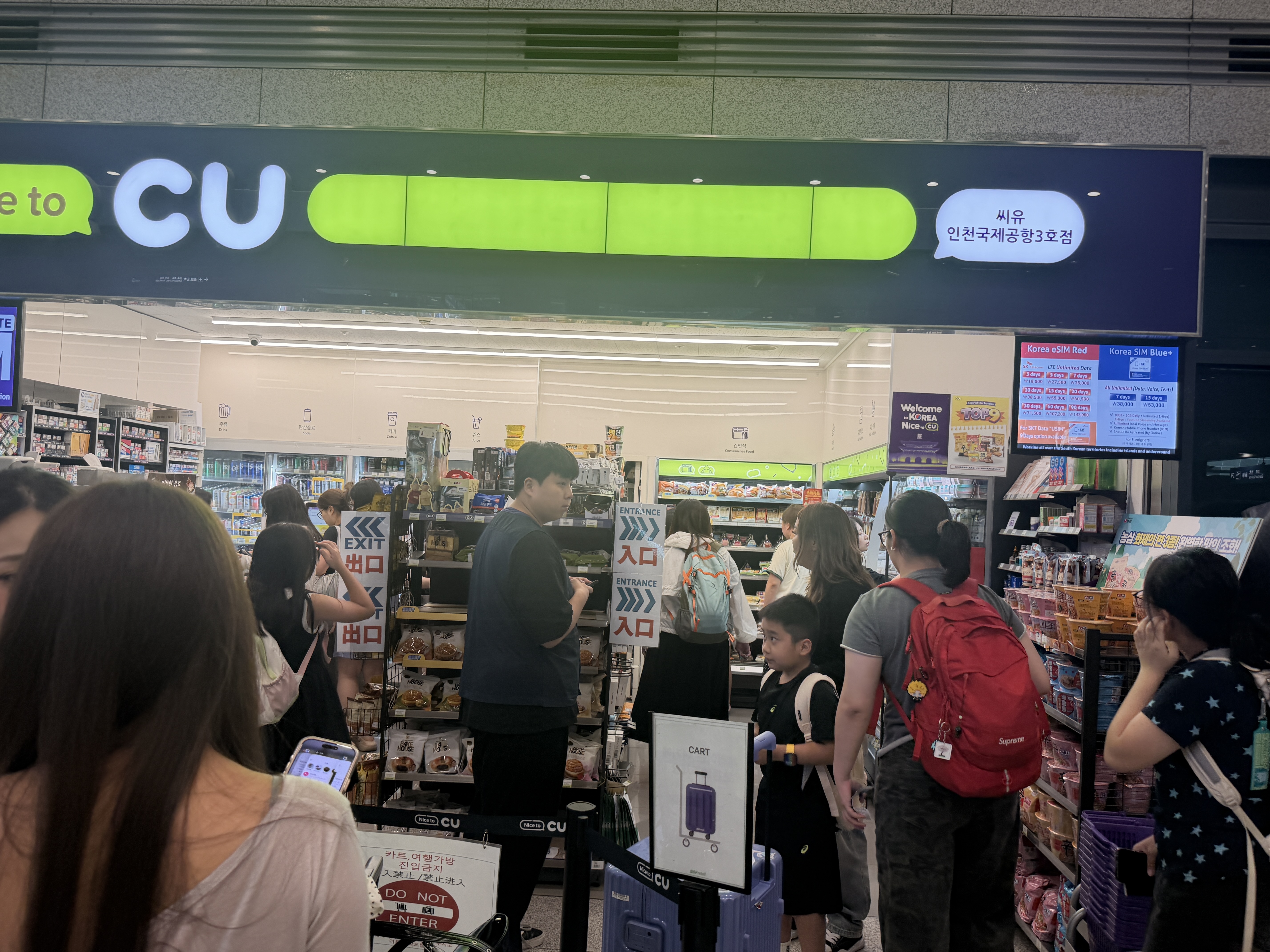
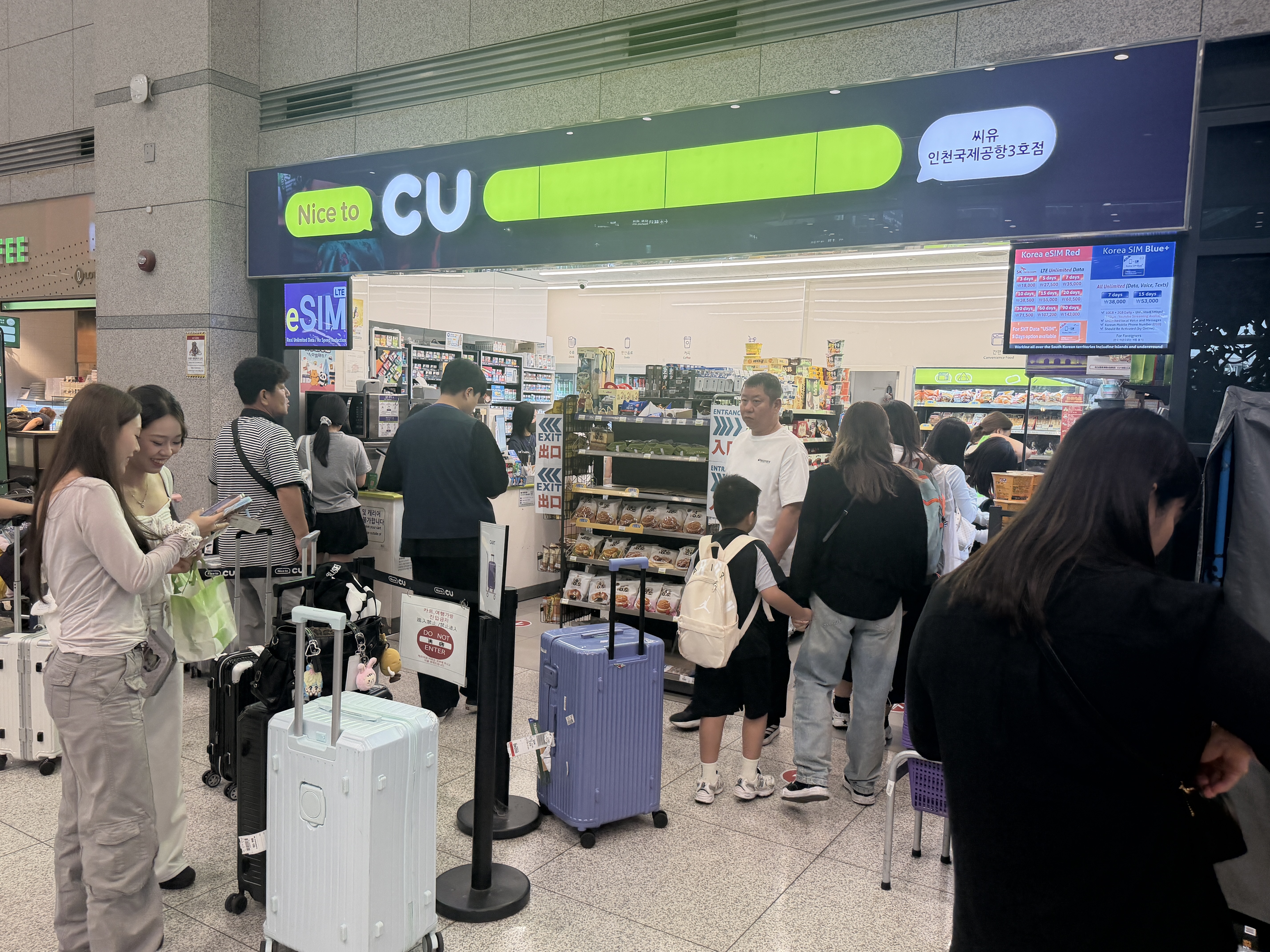
CU Incheon International Airport Branch 3, mid-afternoon — backpacks, suitcases, and a Korea eSIM board doing as much work as the snack aisle.
If you want proof that Incheon runs on convenience stores the same way the rest of the country does, this is it. This CU is more crowded than most of the actual shops selling perfume and chocolate a few gates down. People aren't here for souvenirs. They're here because they forgot a charger, need one more bottle of water, or want the exact snack they've been eating their whole life one more time before they leave the country for two weeks. The eSIM signage by the entrance gets almost as much traffic as the snack aisle — half the line isn't buying food at all, just activating data for the next two weeks.
The Flower Shop Nobody Explains
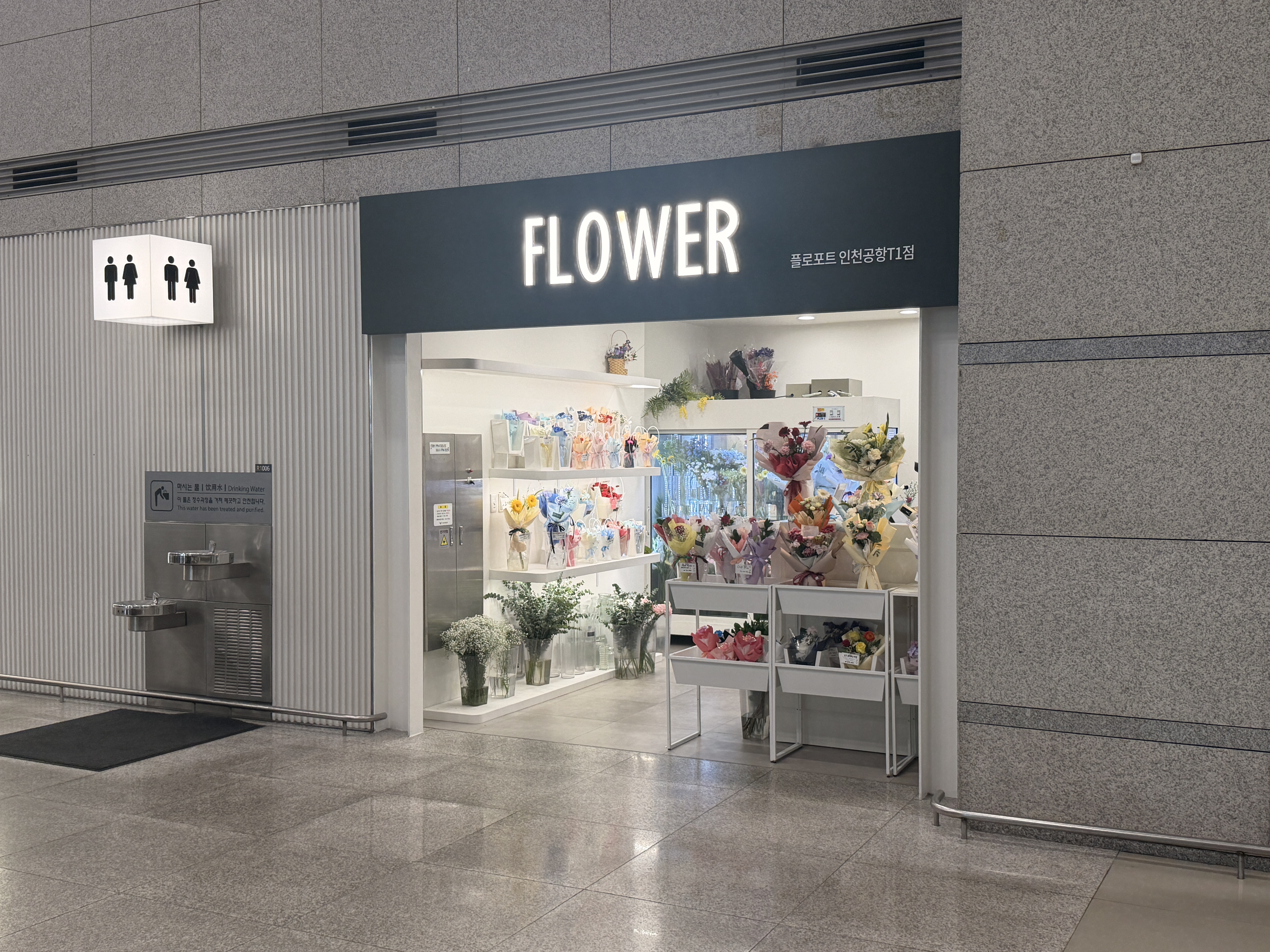
Floport, Terminal 1 — a full flower shop tucked next to a restroom sign and a drinking fountain. A strange but very normal pairing.
This one still gets me a little. Tucked between a restroom sign and a drinking fountain on the first floor near an arrivals exit, there's a full flower shop, stocked and lit up like any flower shop in a neighborhood market. It makes no sense until you remember what an airport is actually for here — it's not just where people leave from, it's where people are picked up. Someone is walking out of arrivals in twenty minutes and someone else wants to be holding flowers when they do. It's such an ordinary impulse that an airport built an entire retail category around it, right next to the bathrooms, and nobody blinks.
And Incheon has a reason to sell more flowers than most airports would ever need. This is the airport idols, actors, and visiting influencers from across Asia actually fly in and out of — which means it's also the airport where fans show up hours early with a bouquet, a handwritten sign, and a phone already recording. "Airport fashion" watching is practically its own genre of content here, and a bouquet handed over the second someone clears arrivals is part of the ritual. A flower shop that stays open next to a restroom sign isn't a strange retail decision at all once you realize how many of Incheon's ordinary Tuesdays involve someone famous walking through Gate D.
An Airport That Isn't Trying to Impress Me Anymore
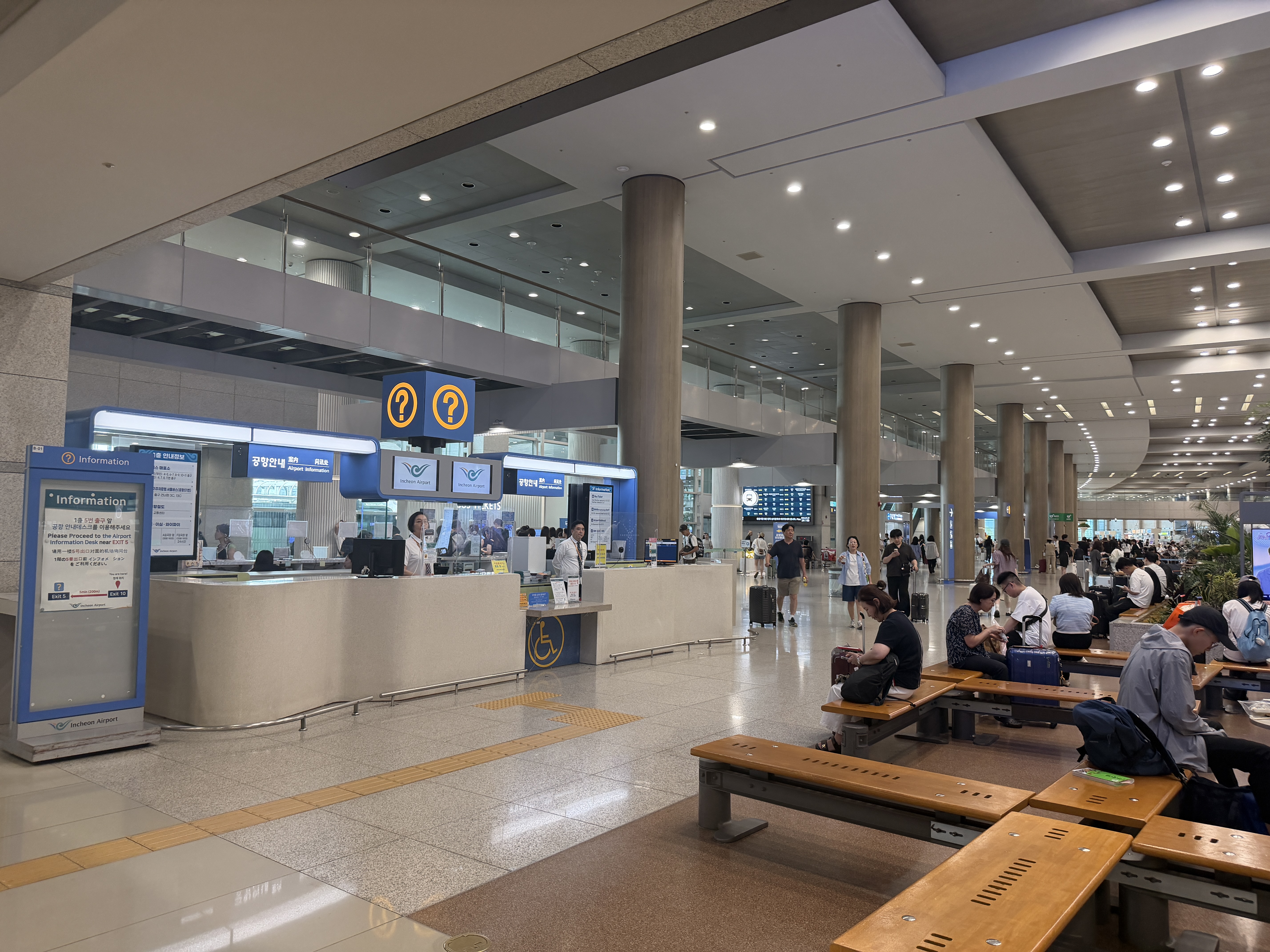
Airport Information — staff at the counter, a small trickle of people asking directions they could have found on a sign.
I think what actually distinguishes a local's Incheon from a tourist's Incheon isn't anything dramatic. It's just that I've stopped noticing the parts that are designed to be noticed — the architecture, the gardens, the award plaques — and started noticing the parts that are designed to be used. The charging towers you stop counting. The CU line. The flower shop nobody questions. Somewhere along the way, one of the most photographed airports in the world quietly became, to me, just a very large hallway with good outlets.
If you're passing through Incheon for the first time, this is the part no ranking will tell you: the building rewards people who stop performing "arrival" and just start looking for the plug, the platform, the shortest line. That's not a downgrade from the spectacle version of the airport. It's just what's actually there, underneath it.
Location note: Incheon International Airport (ICN), Terminal 1 arrivals hall near Gate D — charging towers, bus ticket kiosks, CU (인천국제공항 3호점), Floport flower shop, and Airport Information. Busy working hub; be mindful of travelers with luggage and people waiting for arrivals.