My Korean Apartment Complex Announces Everything Over a Loudspeaker — And I Kind of Love It Now
What daily life is actually like in a Korean apartment complex — building-wide loudspeaker announcements, strict trash-sorting rules, and living this close to hundreds of neighbors.
2026-07-13 · 6 min read
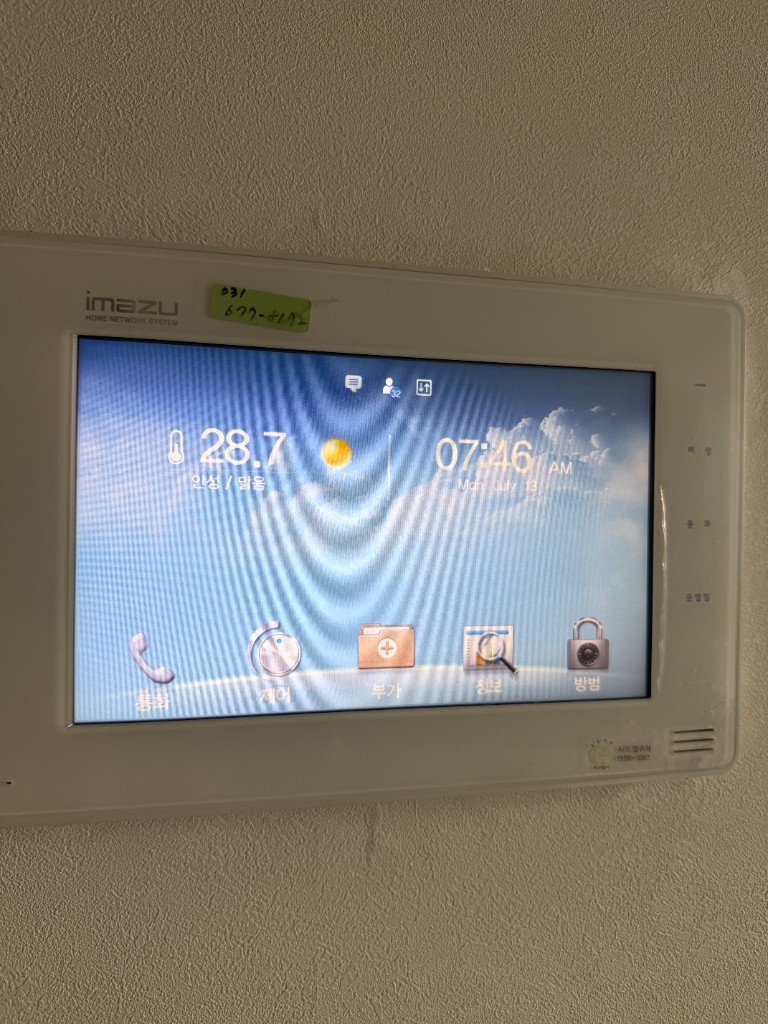
The wall pad by my door — one end of the system that lets the complex talk into every unit. It looks unassuming. It is not.
The first time it happened, I was mid-bite of lunch, alone in my apartment, when a woman's voice suddenly filled my kitchen. Not from my phone. Not from a TV. From the wall.
"Resident of Building 102, please move your vehicle. It is blocking the fire lane."
I actually looked around the room for a second, like the voice might be hiding somewhere. It took me a full week of living in a standard Korean apartment complex — the kind with a number instead of a name, yeol something-dong — to understand that this wasn't a malfunction or a one-time emergency broadcast. This was Tuesday. This was every day. This was just how the building talked to us. Among the Spaces essays on this site, this is the one that starts inside the unit and never really leaves the complex.
The Building Has a Voice, and It Has Opinions
Korean apartment complexes (아파트 단지) are usually run by a management office, and that office has a PA system wired into every unit — the same speaker that carries fire alarms also carries, apparently, everything else. In my building alone, over the past year, I've heard announcements about a lost cat, a car with its lights left on, a scheduled elevator inspection, a reminder that Chuseok gift boxes should not be left in the stairwell, and — memorably — a stern notice that someone's dog had been barking on the 7th floor "since early this morning."
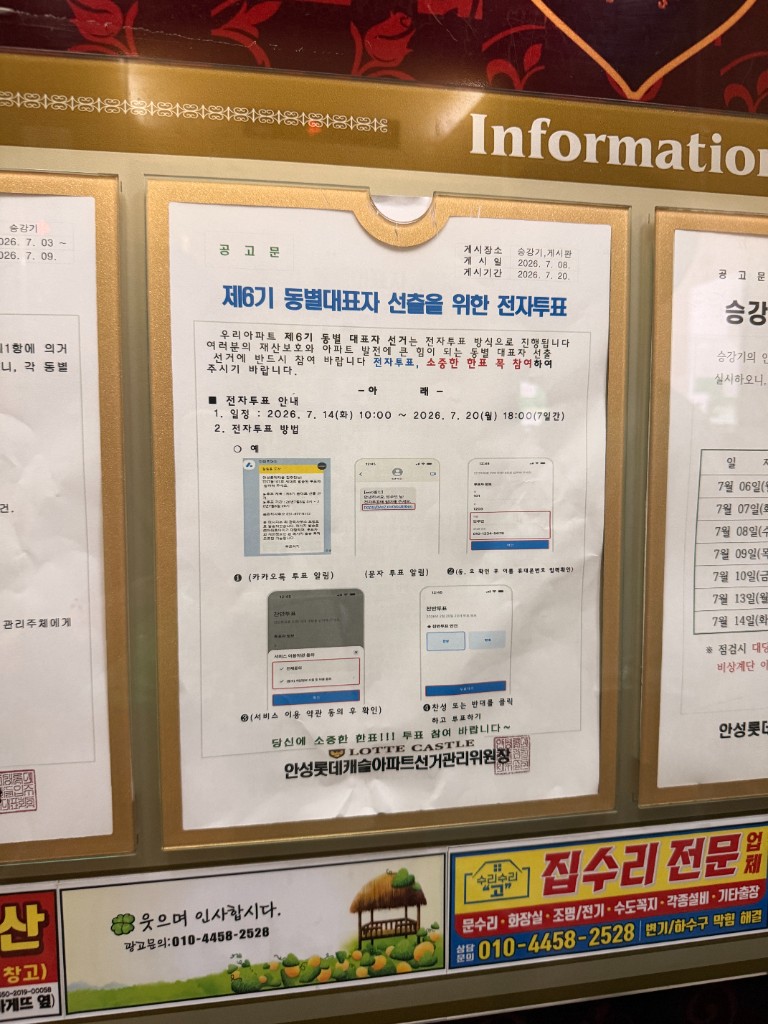
The paper version of the same system — notices by the elevator that nobody reads until the speaker (or the hallway board) tells them to.
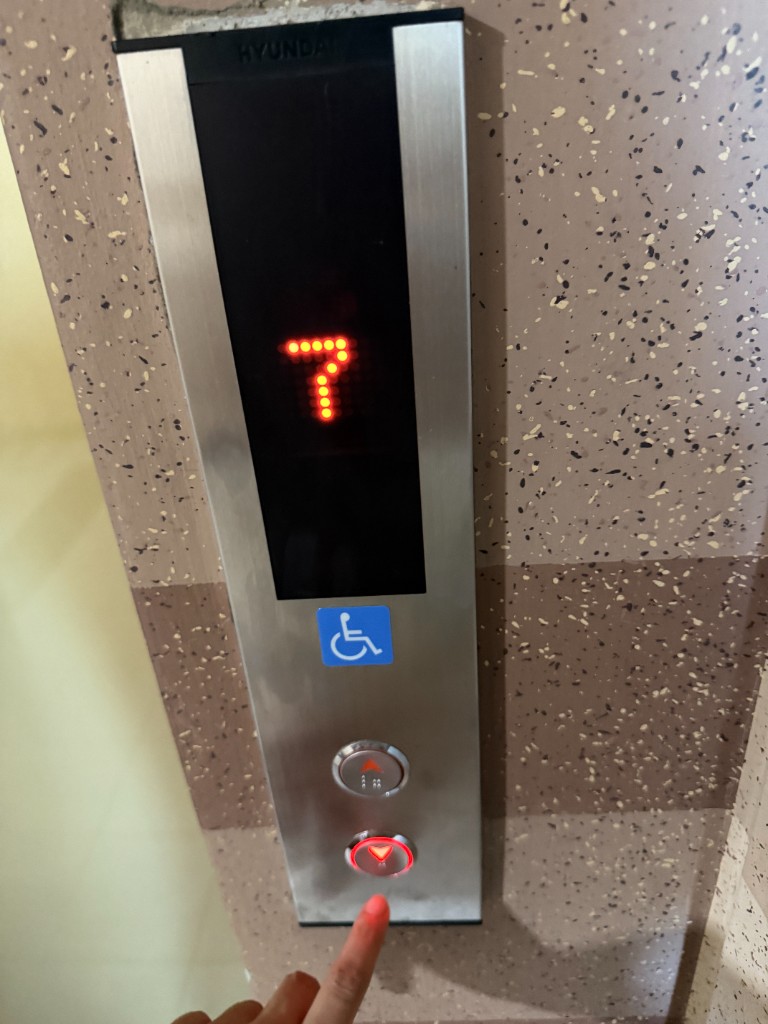
Calling the elevator — the most ordinary second in the building, and the place where the week's notices wait for you.
At first this felt like a genuine invasion of privacy. Where I'm from, nobody knows if your car is blocking a lane except the person you blocked. Here, roughly 800 of my neighbors know it at the exact same moment I do. There is no such thing as a quiet mistake in a Korean apartment complex. Everything is communal, including your embarrassment.
Trash Day Is Not a Suggestion
The announcements about recycling are the ones that actually reprogrammed my brain. Korean apartment complexes run on a strict 분리수거 (separated waste collection) schedule — specific days for food waste, specific days for plastics, specific days for paper, and a designated hour window, usually in the evening, when you're allowed to bring anything down at all. Miss the window and your bag sits by the door for two more days, judged by everyone who walks past it.
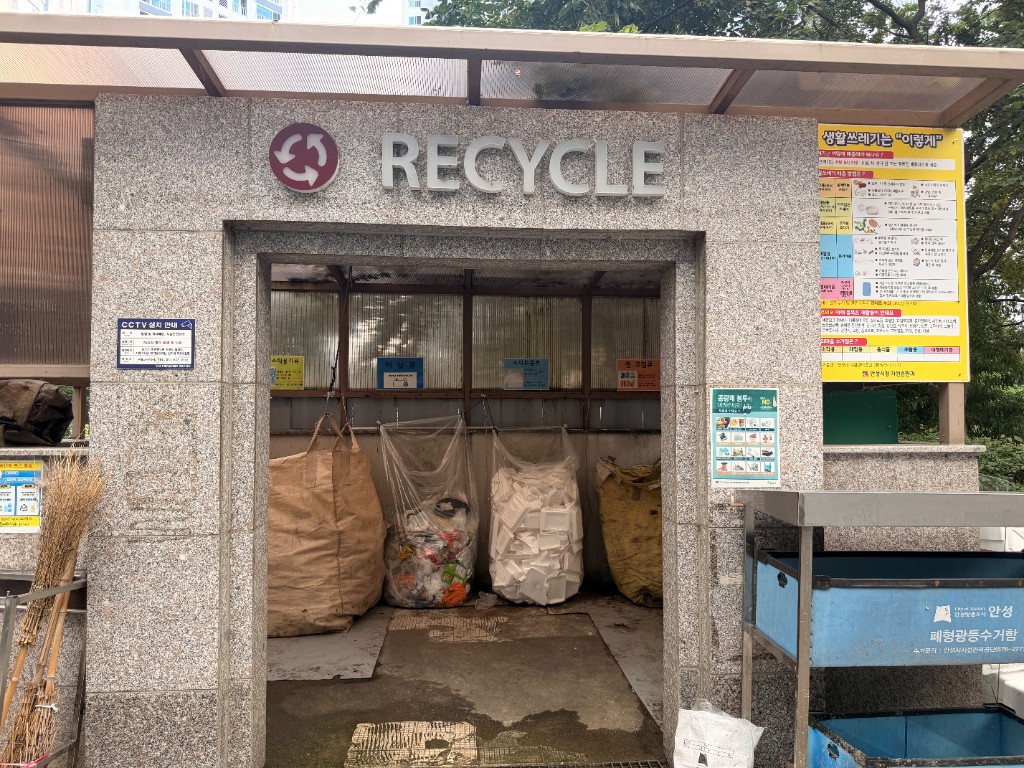
The waste sorting station downstairs — labeled, color-coded, and monitored more closely than I expected.
The first month, I got it wrong constantly. I put a plastic container out on paper day. I didn't know food waste had its own separate, weighted bin that charges by volume. A neighbor — not unkindly, but not gently either — explained the system to me while pointing at my bag like it had personally offended her. Now, a year in, I catch myself sorting yogurt cups by rinse-and-crush habit even when I'm visiting family abroad, and it makes zero sense to anyone there.
Shared Infrastructure, Shared Habits
Once you start noticing the systems, you see them everywhere — not only the speaker and the trash pavilion.
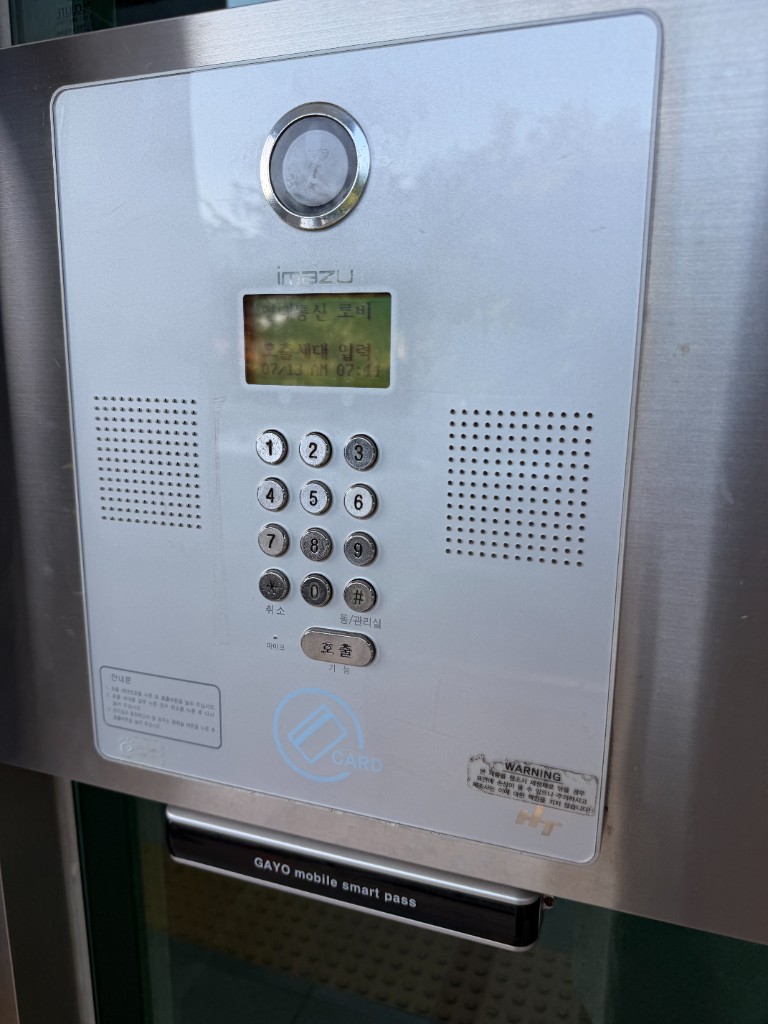
The lobby access panel — another machine that turns several hundred households into one secured front door.
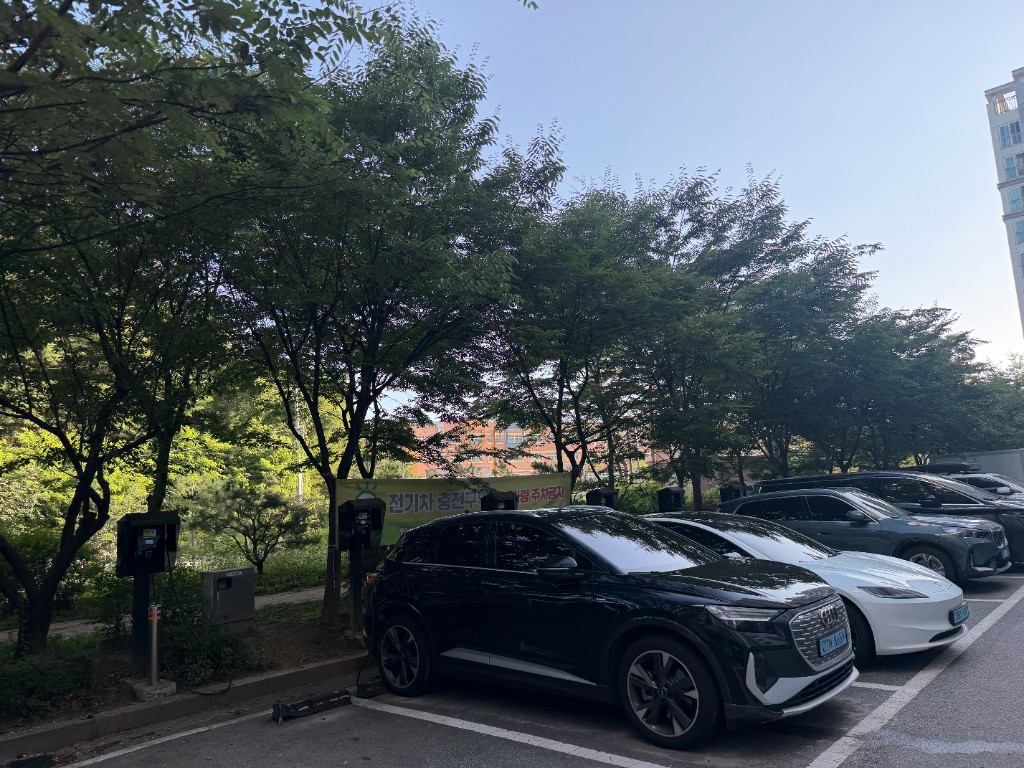
Even the parking lot has rules with teeth — EV charging bays marked off as shared infrastructure, not free-for-all curb space.
What Changed My Mind
I used to think of the announcements as surveillance. Somewhere along the way that flipped into something closer to reassurance. When the speaker said a child was found wandering near the parking lot, ten different apartments must have looked out their windows at once. When there was a gas leak scare two buildings over, I knew about it within ninety seconds, not from an app, from the wall. The system that broadcasts your parking mistake to 800 people is the same system that makes sure 800 people are looking out for you.
Korea's apartment complexes grew explosively dense in a short span of decades, and a lot of the systems that feel strange to outsiders — the announcements, the rigid trash calendar, the shared everything — are really just what happens when a huge number of households have to function as one unit with almost no friction. It's not that anyone loves the loudspeaker. It's that the loudspeaker is what makes several hundred strangers behave like they live in the same house, because functionally, they do.
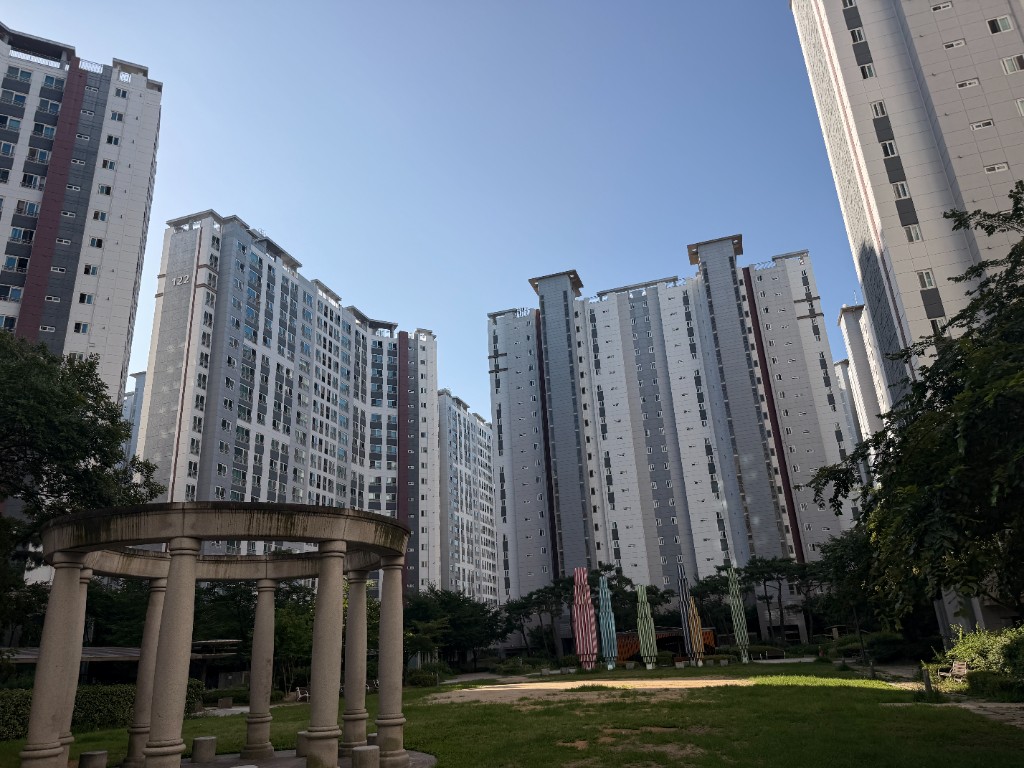
This is "my building" — one of several towers sharing the same speaker system, the same trash schedule, the same early-morning elevator inspection notice.
I still flinch a little every time the speaker clicks on before it talks. But I've also started listening for it, the way you'd listen for a neighbor calling your name from across a yard. It's annoying. It's efficient. It is, in its own overengineered way, kind of a nice place to live.
If you want more of these ordinary Korean Spaces — stairwells, courtyards, shared infrastructure photographed from the inside — start from the category page. And if you want to see what one of these speaker systems actually looks like in person, I'll drop the exact complex or neighborhood in a pinned note when I publish short-form cuts of this — it's a completely ordinary residential area, not a tourist spot, so please be respectful of residents if you go looking.
Location note: Ordinary residential apartment complex in Anseong, Gyeonggi-do. Exact building and unit withheld — please be respectful of residents if you visit the area.